
Our 4D Image Radar Application Platform transforms high-resolution radar data into practical perception, sensor-fusion, simulation, and mapping applications. Built by autonomous-driving application engineers, the platform supports virtual radar injection, multi-radar perception, surrounding SLAM, HD map generation, and customized development for radar companies and automotive OEMs.
Combines multiple 4D image radars to generate dense surrounding point clouds, support object classification, and strengthen spatial perception for autonomous-mobility applications.
Uses surrounding 4D image radars with high-resolution positioning to support real-time SLAM and HD map development without relying only on LiDAR.
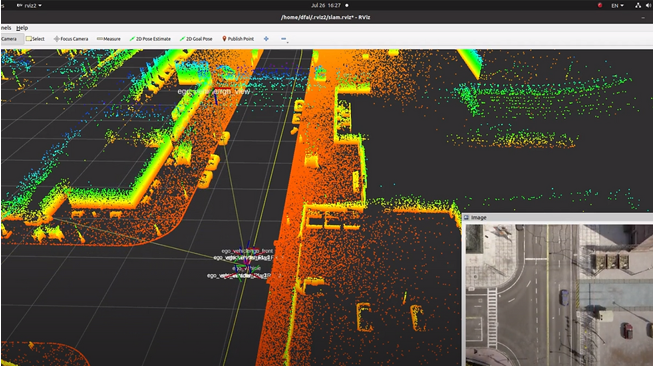
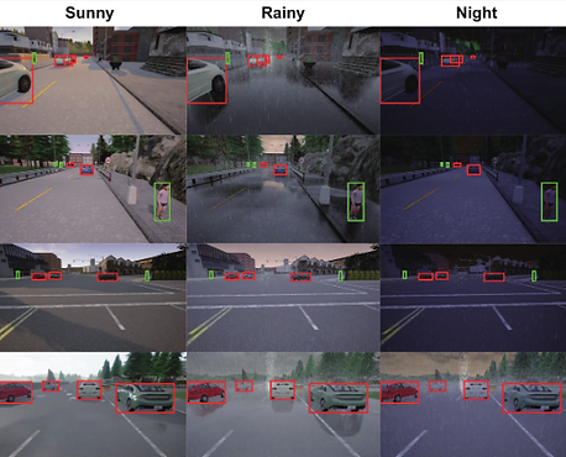
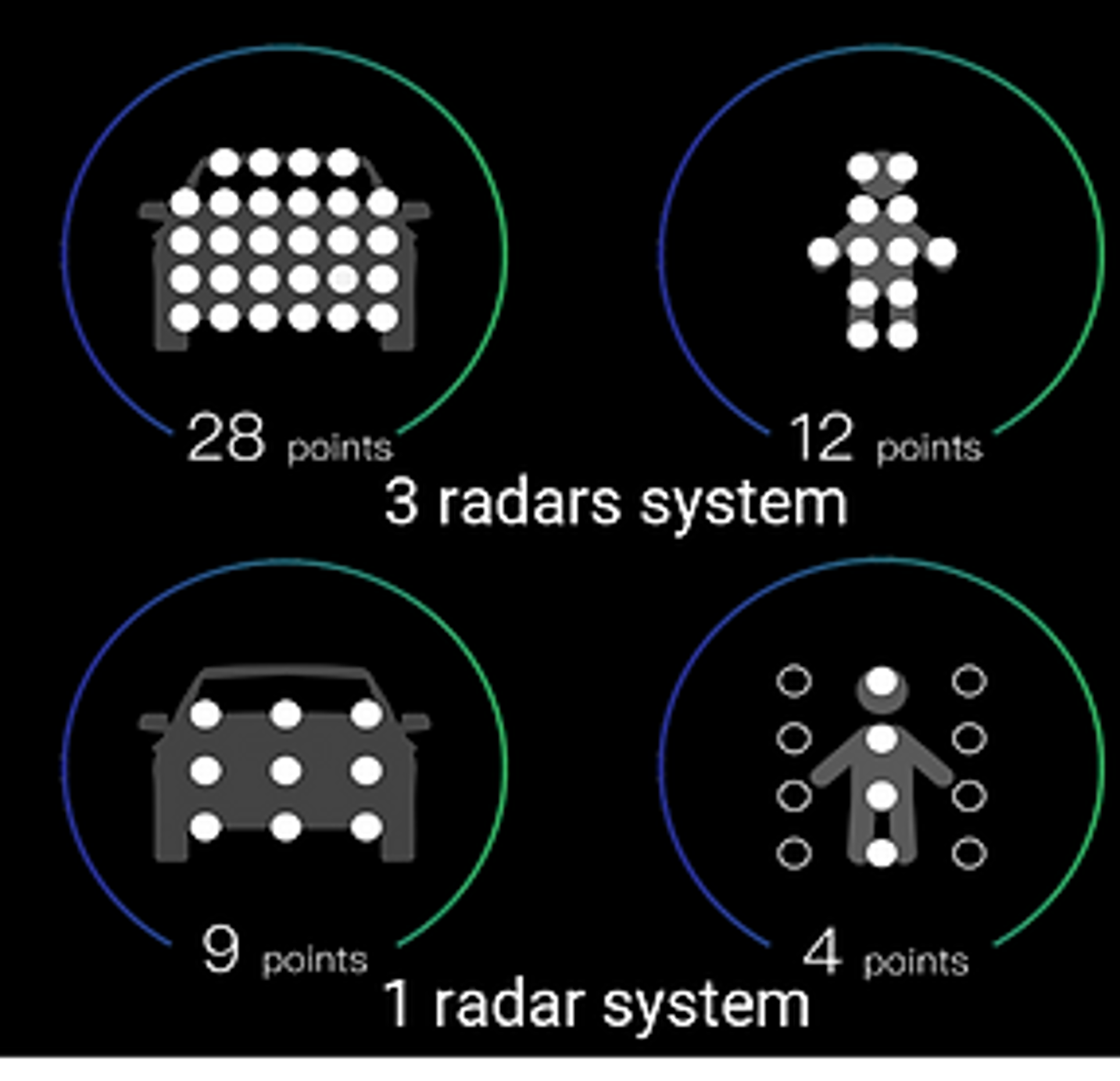
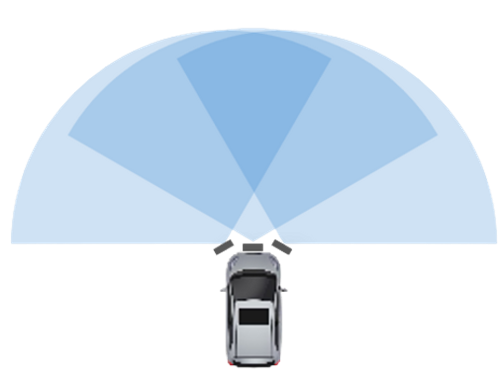
Multi-FOV 192-channel and 288-channel virtual 4D image radar profiles support virtual injection and Vehicle-in-the-Loop development, helping radar teams develop and validate applications before final embedded implementation.
Reports up to 120K valid points/sec with a 192-channel triple-radar configuration and up to 180K valid points/sec with a 288-channel triple-radar configuration, excluding ground data.
A five-4D-image-radar SLAM system uses surrounding radar point clouds to represent road conditions and support HD map mapping.
For five-radar mapping, it reports up to 200K valid points/sec with 192-channel radars and up to 300K valid points/sec with 288-channel radars.
The public portfolio lists support for NVIDIA Orin AGX, TI TDA4AH, and AM69A platforms, enabling radar applications to run on ADAS and edge-AI computing platforms.
“The real opportunity in 4D image radar is not simply collecting more radar points—it is turning those points into perception, localization, and maps that autonomous systems can use. It connects simulation, multi-radar fusion, and real-time SLAM into that application layer.”
From virtual validation to real-world perception – one radar application stack.
4D imaging radar is increasingly relevant to autonomous mobility because it adds richer spatial information to radar’s established ability to operate across challenging lighting and weather conditions. The development challenge is moving from raw radar output to usable perception, tracking, localization, and mapping. It focuses on this application layer, with public work spanning virtual radar profiles, camera-and-radar sensor fusion, multi-radar perception, surrounding SLAM, and customized applications for radar suppliers and automotive OEMs.
Radar Intelligence Beyond the Sensor
Application software for simulation, perception, fusion, localization, and mapping.
| Capability | Details |
|---|---|
| Virtual radar profiles | 192-channel and 288-channel Multi-FOV virtual 4D image radar profiles |
| Virtual development | Virtual injection for Vehicle-in-the-Loop; intended as a development reference for 4D image radar applications |
| Triple-radar layout | Front-center plus right/left 4D image radars |
| Triple-radar throughput | 192-channel: up to 120K valid points/sec; 288-channel: up to 180K valid points/sec; public page notes ground data is excluded |
| Five-radar mapping | Five 4D image radars used for SLAM and HD map mapping |
| Five-radar throughput | 192-channel: up to 200K valid points/sec; 288-channel: up to 300K valid points/sec |
| Positioning | High-resolution INS using RTK + IMU |
| SDK / edge platforms | NVIDIA Orin AGX, TDA4AH, AM69A |
| Customer development | Customized 4D image radar applications for radar companies and automotive OEMs |
Contact our team to discuss mission requirements, payload integration, operating environments, distribution opportunities, or a tailored product demonstration.

Bridging Korean innovation with American business needs since 2010.